Flowers Frame: A Brand-Ready Floral Wreath for Small Business Merch
First Impression: Whimsy with Professional Polish
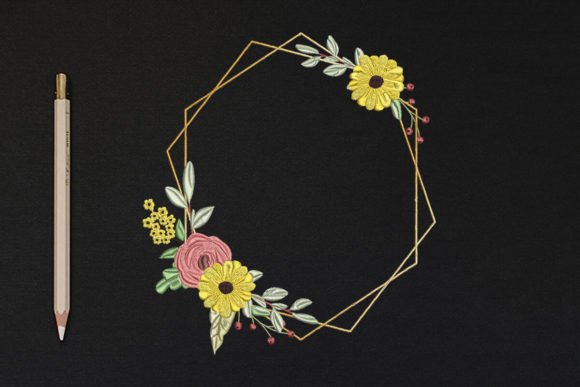
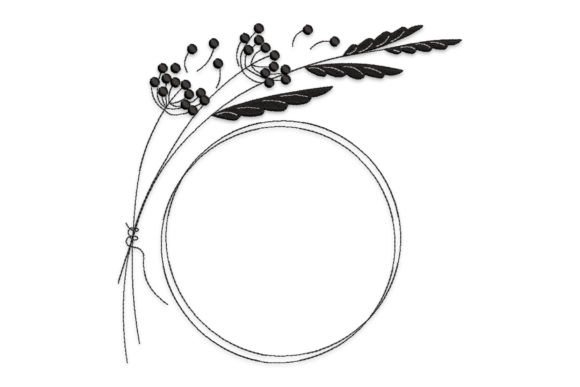
As an embroidery designer who’s digitized and stitched thousands of designs for small businesses—from neighborhood bakeries to indie pet brands—I immediately recognized Flowers Frame’s quiet confidence. The name evokes soft structure, not clutter; the description—“a touch of whimsy and charm”—isn’t just marketing fluff. It signals intentional lightness, balanced scale, and visual breathing room. This isn’t a dense, high-stitch-count floral explosion. It’s a Floral Wreaths design built for recognition, not just decoration. For a café owner choosing chest embroidery for staff aprons or a florist branding reusable tote bags, Flowers Frame feels both handmade and polished—friendly enough for a local boutique, refined enough for a premium product label.
Where Flowers Frame Shines in Real Business Use
Flowers Frame excels where small business merch needs personality *and* professionalism. As an embroidered patch on denim jackets for a creative studio? Perfect—it reads clearly at 2.5”–3.5”, holds detail without bleeding, and adds artisanal warmth without looking DIY-unpolished. On staff uniforms? Yes—especially on left-chest placements for cafés or boutiques. Its circular framing creates natural focal balance, avoiding the “lumpy” effect some wreaths cause when stitched on curved shirt plackets.
For cap embroidery? It works well on structured front panels (think cotton twill or midweight canvas), especially when sized to 2.0”–2.25”. The open center allows for subtle brand initials or a tiny tagline if needed—without overcrowding. On tote bags and aprons, Flowers Frame scales gracefully: at 4” it anchors a corner elegantly; at 5.5”, it becomes a statement piece that still feels intentional, not overwhelming. And for handmade product packaging—think linen gift tags or fabric-wrapped soap boxes—this machine embroidery design translates beautifully into a tactile brand signature.
Etsy sellers and craft businesses benefit most from its versatility in printable mockups. Because the shape is clean and symmetrical, it drops cleanly into lifestyle renders—on mugs, notebooks, or ceramic coasters—without requiring heavy retouching. That consistency across digital and physical assets strengthens brand identity fast.
Use With Care: Practical Limits for Commercial Embroidery
Like any thoughtful embroidery file, Flowers Frame has boundaries—and respecting them ensures your finished product delivers trust, not disappointment. Avoid scaling it below 1.75” for patches. At tiny sizes, delicate petal outlines risk merging, especially on textured fabric like canvas or terry cloth. Cap fronts on low-profile foam-backed caps? Test first—curved surfaces can distort fine outer loops unless digitized with gentle underlay.
High stitch density isn’t advertised here, but if your version includes tight satin borders or layered fill effects, confirm how it behaves on dark uniforms (like navy chef coats) or heavily washed cotton. Dark thread on dark fabric can mute definition—so always review thread colors against your base material. Also, avoid placing it directly over seams or high-flex zones (elbow patches, shoulder yokes) without reinforcing stabilizer. This isn’t a design for stretch knits or ultra-thin voile without significant digitizing adjustment.
How Flowers Frame Builds Brand Trust—Not Just Aesthetics
In small business merch, perception is revenue. A poorly executed embroidered patch whispers “cut corners.” A crisp, well-proportioned Flowers Frame says “we care about craft—and you.” Customers notice the spacing between blooms, the evenness of the frame’s curve, the clarity of negative space. That subtlety elevates perceived value: a $28 tote bag feels like a keepsake; a $14 apron reads as investment-grade. For handmade brands, that nuance reinforces authenticity—not just “handmade,” but *thoughtfully* handmade.
Visually, Flowers Frame supports consistency across touchpoints. Pair it with a simple sans-serif logotype and neutral thread palette (oatmeal, charcoal, sage), and you’ve got a system that works on Instagram posts, shelf tags, and staff uniforms alike. No jarring style shifts. That cohesion builds recognition faster—and recognition builds loyalty.
Embroidery Designer Notes You Can’t Skip
Before stitching your first production run:
- Test in black and white first. Print a monochrome version to check contrast and silhouette integrity—no surprises in thread color selection.
- Verify small-patch viability. Stitch a 2.0” version on your target fabric + stabilizer combo before approving for bulk.
- Review thread color contrast deliberately. What reads softly on ivory linen may vanish on heather grey—always test on actual substrate.
- Inspect spacing and isolation. Does the frame sit cleanly away from edges? Will it hoop smoothly in your standard hoop size? Check for awkward jump stitches near the top.
- Confirm stabilizer match. Lightweight cutaway for stable wovens; tear-away + topping for towels or napped fabrics.
- Create a client-approved mockup. Show Flowers Frame on their exact garment style—not a generic template.
- Compare beside existing design assets. Does it harmonize with your logo, typography, and other design assets? If not, adjust thread tones or placement—not the core motif.
- Confirm commercial licensing. Since this is a digital embroidery file, ensure your purchase grants rights for commercial embroidery, resale of finished goods, and use across multiple clients or product lines.
Remember: Flowers Frame isn’t just a Floral Wreaths motif—it’s a strategic tool. Used intentionally, it turns aprons into ambassadors, patches into promises, and tote bags into walking brand statements. For small business owners and embroidery shops alike, it’s proof that whimsy, when engineered well, wears professionalism effortlessly.