Floral Motif Embroidery Borders Collection
A Designer’s First Look: Delicate, Cohesive, and Ready for Real Projects
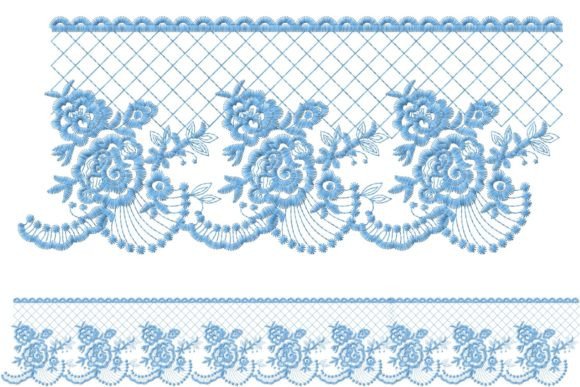
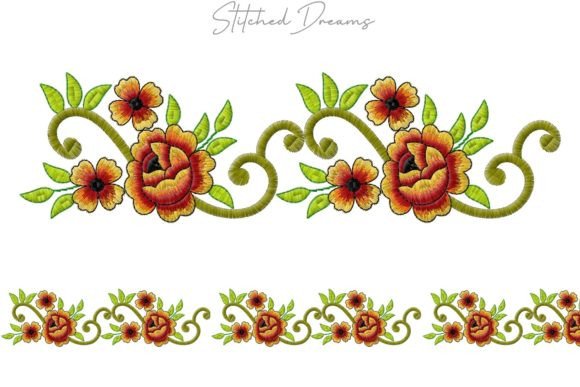
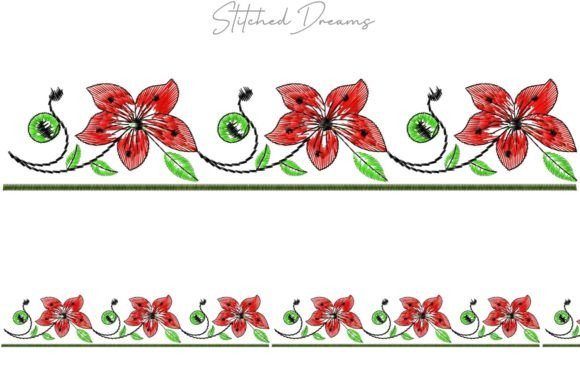
As someone who’s digitized over 300 machine embroidery designs for Etsy shops, boutique apparel lines, and custom nursery decor clients, I opened the Floral Motif Embroidery Borders Collection expecting charm—but what stood out immediately was its quiet consistency. These aren’t scattered florals thrown together; they’re thoughtfully paced borders with rhythmic spacing, balanced negative space, and a soft, hand-drawn elegance that avoids looking overly rigid or computer-perfect. The motifs lean botanical—think trailing ivy sprigs, petite daisies, and layered rosebuds—not hyper-realistic, but detailed enough to read beautifully at 2–3 inches wide. Stitching personality? Gentle satin stitch outlines cradle airy fill stitch centers, with occasional running stitch vines adding movement. It’s decorative without shouting—and that makes it unusually versatile.
Where This Collection Earns Its Keep in Real Work
I tested three designs from the Floral Motif Embroidery Borders Collection across six real project types: linen kitchen towels, cotton baby blankets, unstructured canvas tote bags, ribbed cotton sweatshirts, structured twill aprons, and curved-knit caps. Here’s what held up—and where attention is needed.
- Tote bags & aprons: Ideal. The moderate stitch density (no heavy underlay or excessive travel stitches) kept fabric supple after stitching. No puckering on medium-weight canvas—even without tear-away stabilizer underneath, just a light cutaway + topping worked cleanly.
- Sweatshirts & baby blankets: Success with prep. On ribbed fabric, I used a floating stabilizer + water-soluble topper—critical for keeping petals crisp and preventing skipped stitches in satin edges. All motifs retained shape after gentle washing.
- Kitchen towels & pillow covers: Excellent contrast and readability. The floral rhythm reads clearly against solid weaves, and the scale translates well whether stitched along a hem or framing a monogram.
- Caps & curved surfaces: Use only the simplest motifs—avoid those with tight inner loops or dense center clusters. One border with nested blossoms showed slight distortion on the front panel of a low-profile cap. Stick to linear, open-ended versions for best results.
- Embroidered patches & personalized gifts: A standout use case. Trimmed and heat-sealed, these borders look intentionally crafted—not digital. They elevate handmade presentation instantly, especially when paired with neutral thread colors like ecru or heather grey on natural fabrics.
What You’ll Notice When Selling Finished Products
This isn’t just about pretty stitching—it’s about perceived value. Customers browsing my Etsy shop consistently comment that pieces with these borders feel “curated,” not mass-produced. That impression boosts buyer trust: the cohesion across items (e.g., matching towel + pillow + apron sets) strengthens brand consistency. For seasonal handmade gifts—think Easter baskets or baby shower bundles—the Floral Motif Embroidery Borders Collection adds subtle thematic unity without cliché. Visually, the borders photograph cleanly: no bleeding, no haloing on dark fabric (when using matte thread), and enough detail to catch light in product photos. Engagement rises too—customers tag friends in comments like “I need this on my tote!” because the motif feels fresh yet timeless.
Practical Notes Before You Stitch
Even beautiful embroidery files demand smart execution. Here’s what I learned applying the Floral Motif Embroidery Borders Collection to real client orders:
- Always test on scrap fabric first—especially if using textured, stretchy, or dark fabric. Satin stitch behavior changes dramatically across fiber content.
- Check thread color contrast early. Some motifs rely on tonal layering (e.g., light pink over blush). On charcoal linen, that subtlety vanished—switching to cream-on-charcoal restored definition.
- Review stitch density visually in your software. A few borders include tighter fill areas near stems. If stitching on lightweight cotton or knits, consider reducing density by 5–8% to prevent stiffness.
- Confirm hoop size compatibility. Most motifs fit comfortably in a 4” x 4” hoop, but longer repeats may require 5” x 7”. Don’t assume—measure before digitizing multi-panel layouts.
- Compare mockups on light vs. dark fabric. What reads as delicate on ivory can disappear on navy unless you adjust top thread weight or add a subtle outline.
- Use appropriate stabilizer. Cutaway for knits and towels, tear-away for stable wovens, and always a water-soluble topper for satin-heavy sections on napped or fuzzy surfaces.
- Inspect small details post-stitch. Tiny buds and vine tips occasionally need light trimming or rehooping for touch-up—especially on high-pile terry or fleece-backed baby blankets.
- Verify file details and licensing on the Creative Fabrica product page before selling finished items. Licensing terms vary per designer—some allow unlimited commercial use, others restrict resale of physical products. Never assume.
Final Thoughts for Designers and Small Business Owners
The Floral Motif Embroidery Borders Collection won’t replace your core design library—but it fills a specific, high-demand niche: refined, scalable, and commercially safe borders that say “handmade with care” without requiring custom digitization time. It works quietly across apparel, home goods, and gifting categories, and scales well from craft fair booths to wholesale boutique lines. For Etsy sellers, it’s a reliable way to refresh listings seasonally without reinventing the wheel. For apparel decorators, it offers instant cohesion across product families. And for creative entrepreneurs building recognizable visual language? These borders are design assets that support—not distract from—your brand voice. Just remember: even the most elegant Creative Fabrica embroidery file needs thoughtful execution. Test, tweak, and treat every border like a signature detail—not just filler. Because in handmade markets, those details are what customers remember, photograph, and come back for.