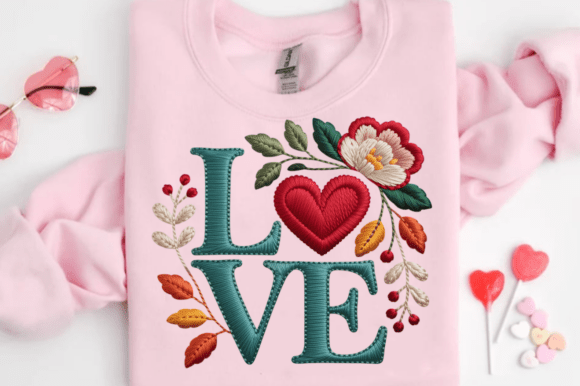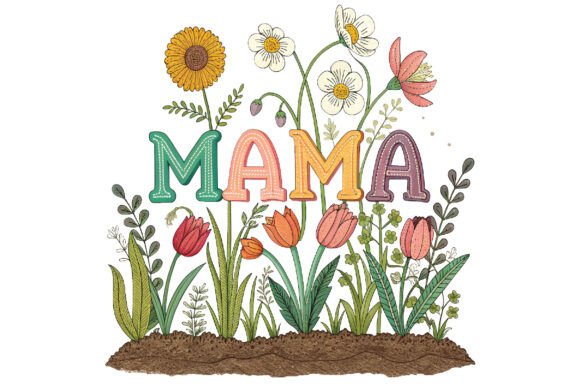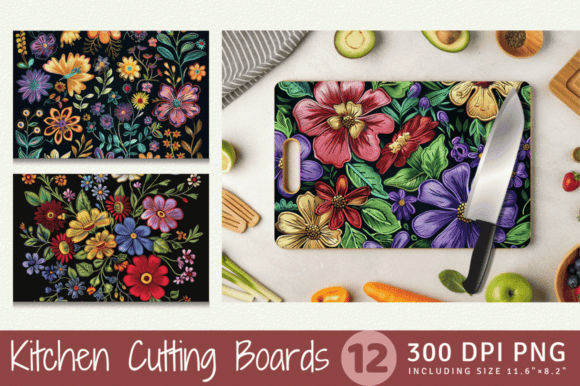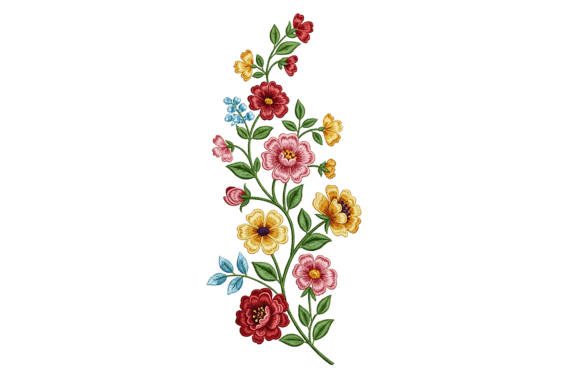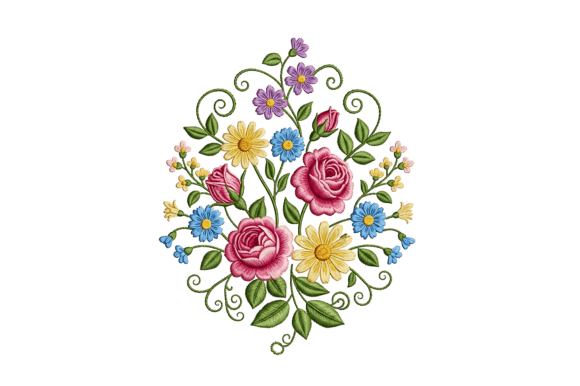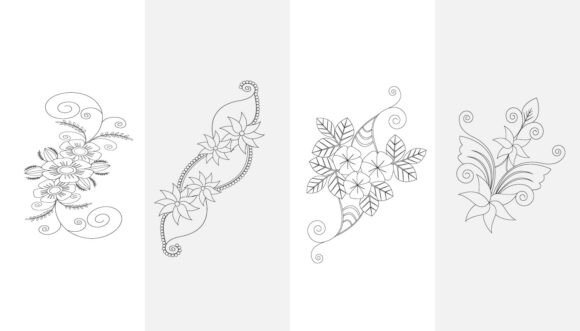
Floral Embroidery Flower Line Art Design
A Designer’s First Glance: Clean, Quiet, and Full of Potential
When I opened the Floral Embroidery Flower Line Art Design, my first thought wasn’t “pretty”—it was “usable.” That’s rare. This isn’t a dense, ornate botanical illustration meant for framing; it’s a deliberate, breathing line art set—minimalist but not sterile, vintage-inspired but not dated. The curves are confident, the stems lean with gentle asymmetry, and the petals suggest motion without fuss. It feels like something you’d sketch in a notebook before committing to thread—not because it’s unfinished, but because it leaves room for the stitcher’s hand, the fabric’s texture, and the wearer’s story.
Real Project Test: A Linen Tote Bag for a Local Botanical Boutique
Last week, I used one of the smaller motifs from the Floral Embroidery Flower Line Art Design on a natural linen tote—intended for a small shop launching a seasonal gift line. No fill stitches, no appliqué layers—just clean running and satin stitch outlines, scaled to 3.2 inches tall. The result? Crisp, legible, and quietly elegant. Customers paused at the counter—not to read a label, but to trace the stem with their fingers. That’s the quiet power of this set: it doesn’t shout. It invites.
Where It Shines (and Where It Asks for Thought)
This design excels where subtlety and craftsmanship align:
- Custom apparel: On midweight cotton sweatshirts or structured caps, the line weight holds beautifully—no bleeding, no puffing, even after washing.
- Baby embroidery: Its open structure avoids heavy fill stitch density, making it ideal for delicate onesies and swaddles—soft to the touch, gentle on skin.
- Embroidered patch: Clean edges translate cleanly to merrowed or heat-seal backing. No tiny interior corners to snag during trimming.
- Personalized gift: Pair it with a monogram or date in a simple sans-serif—this design doesn’t compete. It frames.
- Etsy seller & small shop product: Works equally well as a standalone motif on tea towels or layered subtly into a printable mockup for digital product previews.
Use With Intention—Not Assumption
That same elegance becomes a liability if misapplied. Here’s where I pause—and recommend you do too:
- Small hoop sizes (under 4”): Some larger compositions in the set include fine branching details. Zoom in before digitizing—you may need to simplify a tendril or two for clarity.
- Textured or stretchy fabric: On terry cloth or ribbed knits, very thin lines (<1.2mm) can blur. A light stabilizer + slightly increased stitch width helps—but test first.
- Dark fabric: The line art relies on contrast. If using light thread on navy or charcoal, confirm visibility in both daylight and indoor lighting. A subtle underlay can lift definition without adding bulk.
- Curved surfaces (like caps or curved pillow covers): The longest stems and sweeping curves respond best when hooped flat *before* mounting—not stretched over the curve mid-stitch.
- Frequent-wash items: While the design itself is durable, avoid placing intricate inner loops directly over high-flex zones (e.g., elbow seams or waistbands) unless reinforced with a lightweight tear-away.
What It Adds to Your Finished Product—Beyond Aesthetics
Using the Floral Embroidery Flower Line Art Design does more than decorate—it elevates perception. Handmade product buyers notice restraint. They associate clean line work with intentionality, care, and confidence—not just skill, but judgment. For an Etsy seller, that translates to higher perceived value and stronger repeat engagement. For a craft fair vendor, it reads as boutique-ready, not hobby-grade. And for a commercial embroidery shop? It’s a reliable, low-risk asset—scalable across client briefs without requiring custom redraws.
Practical Notes Every Embroidery Designer Should Run Through
Before stitching—or listing your next handmade product—take these five minutes:
- Test on scrap fabric that matches your final project’s weight and weave—not just cotton broadcloth.
- Check thread color contrast in natural light *and* on your phone screen (for mockups). What reads softly in person may vanish digitally.
- Review stitch density in your embroidery software. Even line art can generate tight satin runs—adjust pull compensation if needed.
- Confirm hoop size compatibility for your machine and intended placement. Some motifs span nearly the full 5x7”—fine for a pillow cover, tight for a baby cap.
- Inspect small details at 200% zoom: Are any intersecting lines too narrow for your needle and thread combo? Does the design include optional elements (like leaf veins) you’ll want to toggle on/off?
Final Thought: A Design That Respects the Process
The Floral Embroidery Flower Line Art Design doesn’t try to be everything. It’s not a maximalist statement piece, nor is it a generic clipart filler. It’s a thoughtful tool—one that assumes you know your fabric, your machine, and your customer. It works because it leaves space: space for your technique, your brand voice, and the quiet pride people feel holding something truly handmade. Whether you’re prepping a holiday embroidery run, building digital embroidery file bundles for your shop, or choosing design assets for your next small batch of aprons, this set earns its place—not as decoration, but as trusted collaborator.